
Shubhranshu Singh

Shubhranshu Singh Envisions Growth In India’s Marketing Landscape

Generative tech does not threaten marketers but enhances their capabilities, says Subhranshu Singh, Chief Marketing Officer – CVBU, Tata Motors [siteorigin_widget class=”SiteOrigin_Widget_Image_Widget”][/siteorigin_widget] For Shubhranshu Singh, marketing wasn’t just a career choice but a calling. His entry into the world of marketing was driven by a desire for unending curiosity and creative challenges. He looks at marketing as a discipline that intertwines with virtually every aspect of the world, from finance to sociology or entertainment to consumer trends. The Marketing Scenario With India’s robust economic growth and an increasing consumer base, Singh predicts a significant upswing in marketing budgets. He envisions ad spends increasing by 13-15 per cent in the upcoming year. He notes that established industry leaders often drive ad spend growth, but newer sectors such as ecommerce and edtech may exhibit more caution in the short term. In the age of digital dominance, the debate between digital and traditional media rages on. Singh emphasises that both have their roles to play in the marketing mix. While digital media has witnessed tremendous growth and has become a part of daily life, traditional media, especially television, remains a significant and effective medium. In regional markets where language plays a crucial role, traditional media holds its ground. Events such as the ICC World Cup continue to draw viewership to television, indicating that it’s far from losing its relevance. Marketer’s Role in AI Age The rise of generative technologies has raised questions about the future of marketers. Singh believes that the rise of artificial intelligence (AI) does not threaten the existence of marketers but enhances their capabilities. “AI’s ability to simulate human-like interactions and enhance personalisation is valuable, but it does not diminish the significance of marketers,” he says. Singh believes that marketing inherently involves creativity, empathy and an understanding of human behaviour. AI can assist in the creative process but cannot replicate the depth of human insight. As regulations surrounding data privacy and security become more stringent, Singh views these developments as positive for marketing. Stronger data protection norms will increase consumers’ trust in brands. “Brands that earn consumer’s trust will have greater permission to use first-party data and provide more personalised and valuable experiences,” he says. Marketers who respect data privacy and use data responsibly will earn consumer trust and deliver more personalised and relevant experiences. Data is an asset, but its ethical and responsible use is paramount. “Marketing is about creating value and enriching lives,” states Singh. His advice for budding marketers is around the importance of curiosity, honesty and a balance between analytical and creative thinking.   Link: https://www.businessworld.in/article/Shubhranshu-Singh-Envisions-Growth-In-India-s-Marketing-Landscape-/16-09-2023-491581/

Shubhranshu Singh Envisions Growth In India’s Marketing Landscape Read More »
Simply Speaking: The rise and fall of Kodak

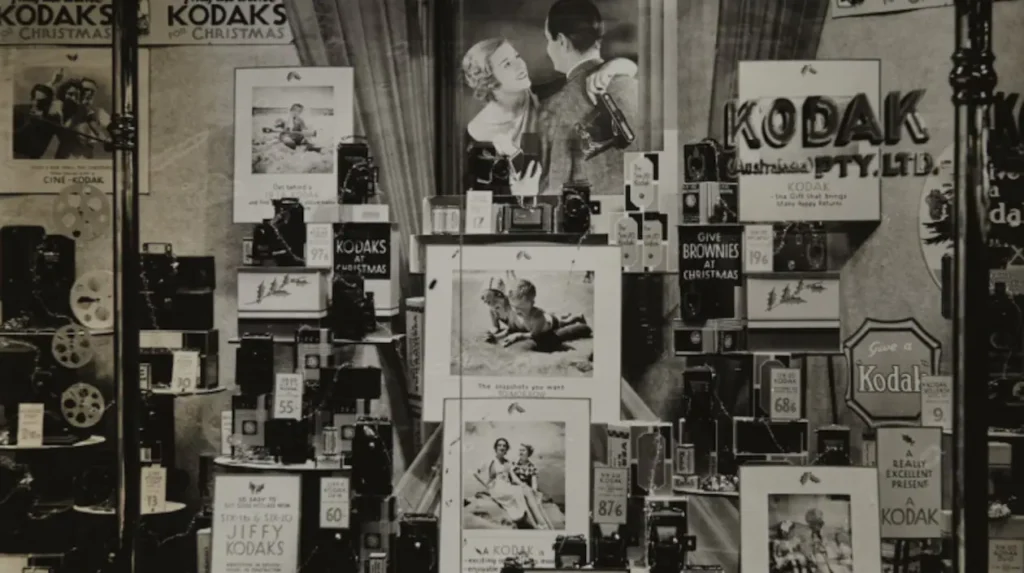
If ever there was a brand that owned a category, it was Kodak. But it lost its way thinking what it did was always right. [siteorigin_widget class=”SiteOrigin_Widget_Image_Widget”][/siteorigin_widget] In 1996, Kodak was ranked as one of the four most valuable brands in the world behind Disney, Coca-Cola and McDonald’s. The brand’s themes resonated in every heart as ‘America’s storyteller’. On billions of occasions, it gave consumers ‘Kodak moments’ to cherish. In doing so, it entered the mainstream of social life and culture. Owning good times and fond memories was as powerful a platform as any brand could claim and own. (Representative image via Unsplash) “A dark tent, a nitrate bath, and a water container.! You did not bring just a camera to take a picture; you brought the whole lab. All this was to change, thanks to George Eastman. Eastman founded a company that has had major worldwide influence almost since its inception. To initiate and maintain an organization with such clout, Eastman required a variety of resources, including the intelligence to develop new processes, a good business sense, and a willingness to take risks. But it is unlikely that Eastman’s success could have been achieved without his strong brand: Kodak.” – Building strong brands – David A. Aaker Facebook bought Instagram for $1 billion in 2012, a shocking sum at that time for a company with 13 employees. The same year Eastman Kodak – the most storied company in imaging went bankrupt. It is a chapter of business history that marketers need to go back to again and again. Kodak was an institution. Anyone of my generation or before will instantly understand the meaning of the phrase “A Kodak Moment.” Kodak became an iconic brand. It was the source of a flood of innovations. It single handedly created a market and category. George Eastman had a simple vision: to make photography as simple as using a pencil. In the late 1800’s photography, a newborn process and technology was complicated. The sheer logistics of capturing images was hassle prone and mechanical. Cameras were big, heavy and hard to use. Besides the bulky cameras and their set up, you had to move with a lab to develop the plates. In 1888, Eastman began marketing a camera that made photography accessible to all, not just to the committed artist. The camera sold for twenty-five dollars. The beginner had only to pull the cord, turn the key and press the button. For ten dollars, the pictures would be developed and new film would be reloaded. One of Kodak’s first ads in 1888 served to position the firm for the next century. It showed a picture of a hand holding a camera, with a headline written by Eastman: “You press the button, we do the rest.” That is a compelling brand promise. It is evident of clarity and purpose. George Eastman made photography simple and portable. He democratised it, made it accessible, cheap and universal. In 1892, he created the roll film and a camera capable of taking advantage of the roll. Kodak was a fountain of first ever innovations. The folding Kodak, introduced in 1890, was easier to carry. The Kodak Brownie, launched at the turn of the century, remained the company’s staple product for almost eighty years. The Instamatic, an easy-to-load camera with flash cubes was introduced in 1963. A disposable Kodak FunSaver arrived in 1988 wherein the entire unit camera and roll were to be handed to developing studios for processing the film and recycling the camera. The brand was seen as iconic, but the brand’s purpose wasn’t seen as legitimately empowered to create shared value throughout the ecosystem of product developers, service providers, software developers, social media channels, and influential customers that comprised the new digital world. Consumers gravitated toward others who executed better than Kodak. For over a century, Kodak remained synonymous with capturing life’s moments. Promotions, advertising and an omnipresent logo also did their part to build awareness for Kodak. As early as 1897, twenty-five thousand people participated in an amateur photographic competition which Kodak sponsored. In 1904, it brought to life a ‘Traveling Grand Kodak Exhibition’ of forty-one photographs. As America built motorways, it erected “Picture Ahead!” road signs cementing its association with imaging. Its advertising was always about fun times, family and the product was presented bang centre. During the Kodak hour which was heard on radios in the 1930s, listeners heard family photo albums being described. Photo albums became the record of lives lived. A 1967 award-winning Kodak commercial featured a couple in their sixties cleaning the attic. They chance upon a carton of old photos showing their entire life journey starting in their twenties and across the years that followed – getting married, enjoying their honeymoon, having their first child and attending the graduation of their son. The commercial ended with the woman, now a grandmother, grabbing an Instamatic to take a picture of her new-born grandchild. Kodak made an early decision to go global. Only five years after the Kodak camera was introduced in the United States, a sales office was opened in London. In 1930, Kodak had 75 percent of the world market for photographic equipment and about 90 percent of the profit. In 1996, Kodak was ranked as one of the four most valuable brands in the world behind Disney, Coca-Cola and McDonald’s. The brand’s themes resonated in every heart as ‘America’s storyteller’. On billions of occasions, it gave consumers ‘Kodak moments’ to cherish. In doing so, it entered the mainstream of social life and culture. Owning good times and fond memories was as powerful a platform as any brand could claim and own. But, by the time it went bankrupt in 2012, Kodak had vapourised $30 billion in market value between a peak in 1999 and its eventual demise in 2012. What happened ? What lessons may we all learn ? The shorthand answer given is that Kodak missed the digital photography epochal change and that its digital-age products were simply sub-par. Indeed there is a case to be made for poor strategic planning, lack

Simply Speaking: The rise and fall of Kodak Read More »

Brand Matters: Exceptional means make an exceptional brand- Red Bull

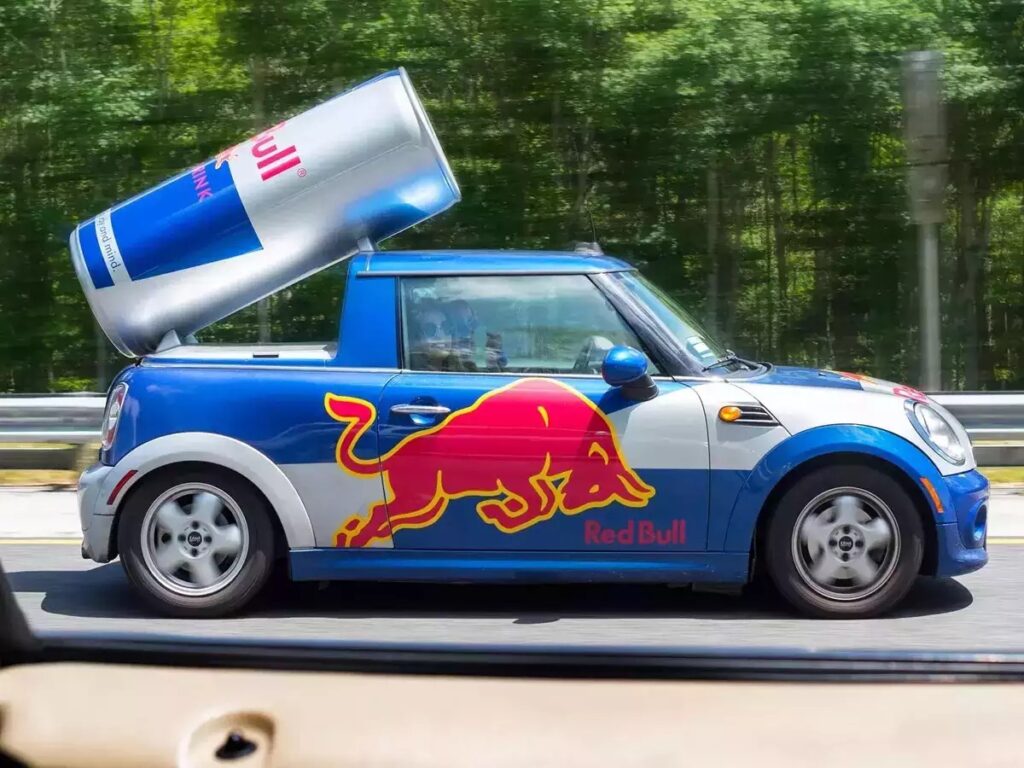
Red Bull was very consistent in associating with and embodying all things extreme. It focused deeply on the extreme sports market. [siteorigin_widget class=”SiteOrigin_Widget_Image_Widget”][/siteorigin_widget] “In order to be irreplaceable, one must always be different.” —Coco Chanel   It is often claimed that the world of soft beverages is where the brand creates the most value followed distantly by a commodity product. You drink the brand not the liquid. Red Bull’s brand building has been extreme. It has been unrelenting. In the early 2000s, two Austrian entrepreneurs decided to dive head in and own a niche in the soda industry, unmindful of the massive barrier that the entrenched presence of global heavyweights Coca- Cola and Pepsi presented. Their optimism was so possessing that they overlooked one problem that their drink tasted terrible. Research after research validated that, at first taste, consumers found the taste horridly medicinal. The plans remained unchanged. What is more, in an act of chutzpah , the founders decided to sell the drink in smaller quantity per serve and priced it almost twice as much as Coke. All the data crunchers predicted a tragic outcome. They were all wrong. Today, it’s a globally recognised name generating $7bn in revenue each year. We know it as Red Bull. We must study and learn from Red Bull’s success against the odds. In branding opposite extremes can both be viable. The opposite of a great truth can also be a great truth. The converse of a great brand idea can also be a great brand idea. That is why it may be incorrect to judge Red Bull by Cola standards. The smaller size, thin can, medicinal taste, all seem to have -in fact- boosted its differential appeal. Pricing it above its competitors also positioned it as a speciality drink, in line with its perceived magical – almost medicinal – qualities. These features may be important. But Red Bull’s success, more than anything, comes down to its brand’s core value – Living extreme. No matter where and why you drink Red Bull – as fuel at work, pre party energy booster for an all-night out, or that bit of extra pep right before a big presentation – it is helpful to recall that at the start, the core target was a very small but aspirational minority : extreme sports enthusiasts. Red Bull wanted to own the transition between avocation and passion. From “I do paragliding” to “I’m a para glider”. It is the wilful transformation and its inherent appeal that Red Bull was targeting. Not just for paragliding, but for all adventure. Red Bull focused deeply on the extreme sports market. Beyond the screens and billboards, it embodied the active brand personality in its outreach in curating memorable experiences. These brand experiences were such that they aligned with their extreme traits that it wanted to own. It promoted and sponsored the X-Games– this is back when trendier extreme sports such as skateboarding, snowboarding and rollerblading were not in the federated International Olympic circuit. Red Bull was very consistent in associating with and embodying all things extreme. It’s been 10 years since Felix Baumgartner did the impossible and jumped from the edge of space all the way down to Earth. Carried up almost 39 kilometers high, Baumgartner then took the leap in a specially designed pressure suit and entered freefall before deploying a parachute to land safely back on the ground. Baumgartner also became the first person to break the sound barrier without any form of engine power. A new documentary is now depicting Red Bull Stratos in all its audacious ambition on its 10-year anniversary. Red Bull’s brand building has been extreme. It has been unrelenting. Going from success to success it hasn’t relied on the conventional 4 Ps. It is a lifestyle brand which happens to sell a beverage. Its product is subservient to its brand story, , and all aspects of branding tactics from messaging to brand experiences and customer touchpoints are consistent. If not the brand’s aura and excitement what is left? There are many substitutes to secure the same raw utility as you get from the product. There are now many copycats and other energy drink that taste better. What enables Red Bull to remain at the top of the pack is its strong bond with the consumer. RedBull’s extreme associations have been nurtured and never cease to deliver. In a brilliant extension to storytelling, Red Bull proposed that “extreme” doesn’t have to be restricted to sports and it began to expand its definition of “extreme”. Be it an athlete or a rock star or a young entrepreneur seeking venture funding – their product ‘vitalises body and mind’ for all . Red Bull is also a large publisher and its owned media -prominently led by Red Bull TV, social channels, events and partnerships – push this agenda all the time. Their advertising position is “Giving wings to people and ideas”. Marketing to the “extreme in all of us” allowed Red Bull to extend its identity base. The overt message to the consumer is that she will soar and triumph and Red Bull is the surge of energy that she needs. Red Bull hosts the Red Bull Festival which showcases a wide range of performers. For 30 days, across New York City, there is an experiential embodiment of the brand. What started as a drink for extreme sports enthusiasts has grown to become the drink for the “extreme” in all of us. In other words, Red Bull went deep, while also going broad. Without a doubt, there has been brilliant execution, but the most important step is the formulation of the identity itself. Red Bull going with “extreme” was a unique stroke of marketing genius, which checked all the boxes: it differentiated away from its competitors, it resonated with a core set of consumers and it was scalable to a wider audience. It also aligned perfectly with the functional features of the product itself. Foundational depth and solidity gave it

Brand Matters: Exceptional means make an exceptional brand- Red Bull Read More »

Scroll to Top